
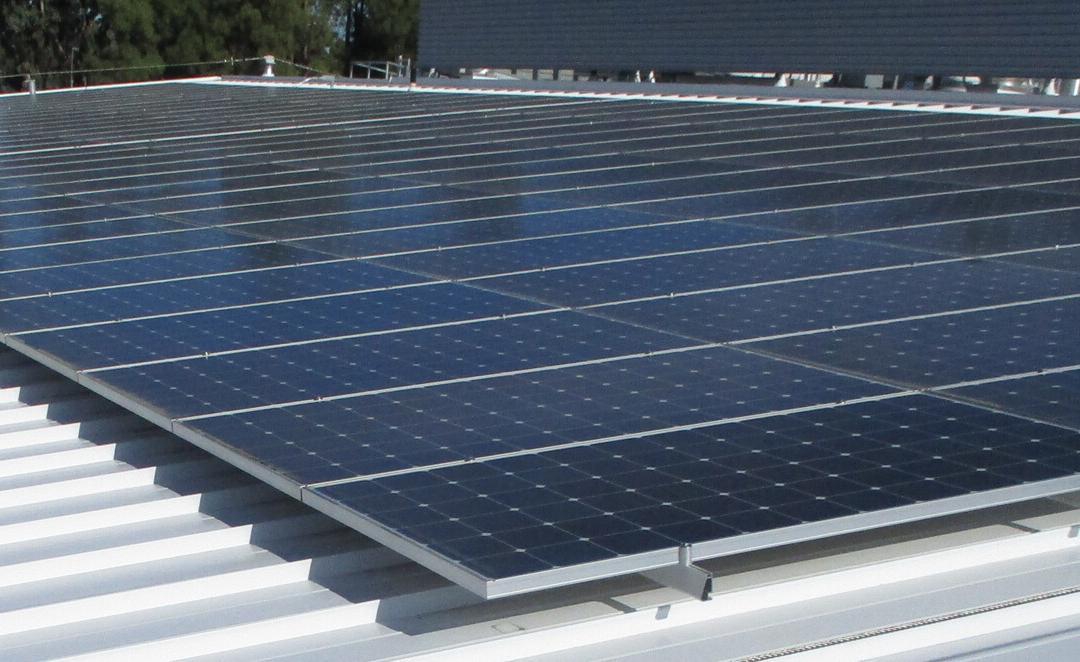
Rooftop Solar & Waterproofing
by: CRS Roof Consultants
A management client recently asked the perfect question regarding solar panels and roof system upgrades. The team is about two years ahead of the capex event so timing was perfect.
Explaining the project profile, our client asked, “what would be the best way to approach this, and what would be the most cost-effective method”.
The short answer, “It all depends on how solar is mounted” seems simple enough but regulations on weight and a roof fully covered in panels create complications.
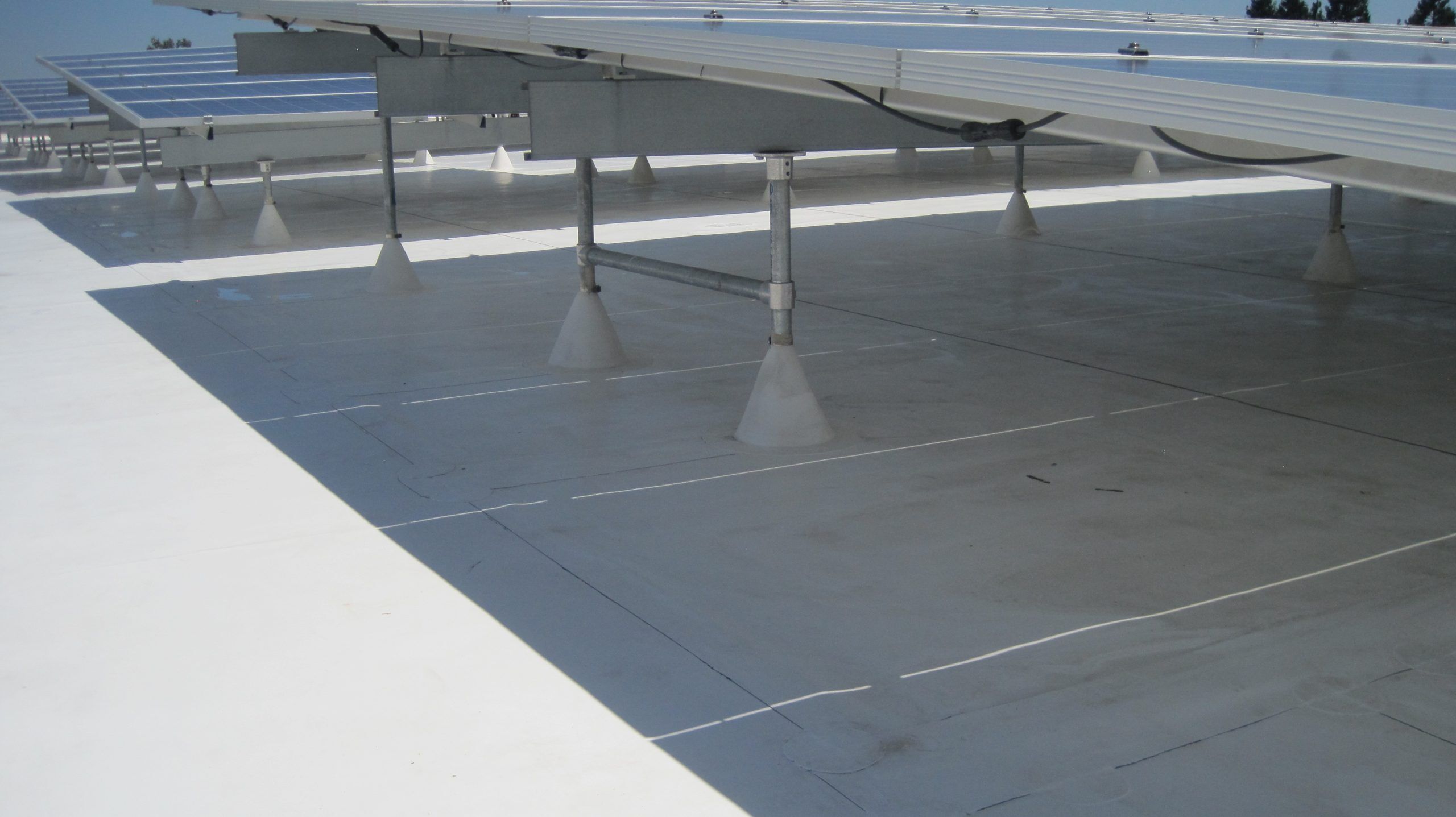
Support Mounted Solar
Installing a new roof around existing solar is easiest and least expensive when panels are suspended high enough above the substrate that contractors can work around the solar equipment sealing the mounting points along the way.
An elevated framework not only provides room but is a good indication installers were likely to attach vertical stanchions to key structural components guided by an engineer’s analysis validating where to best position those supports.
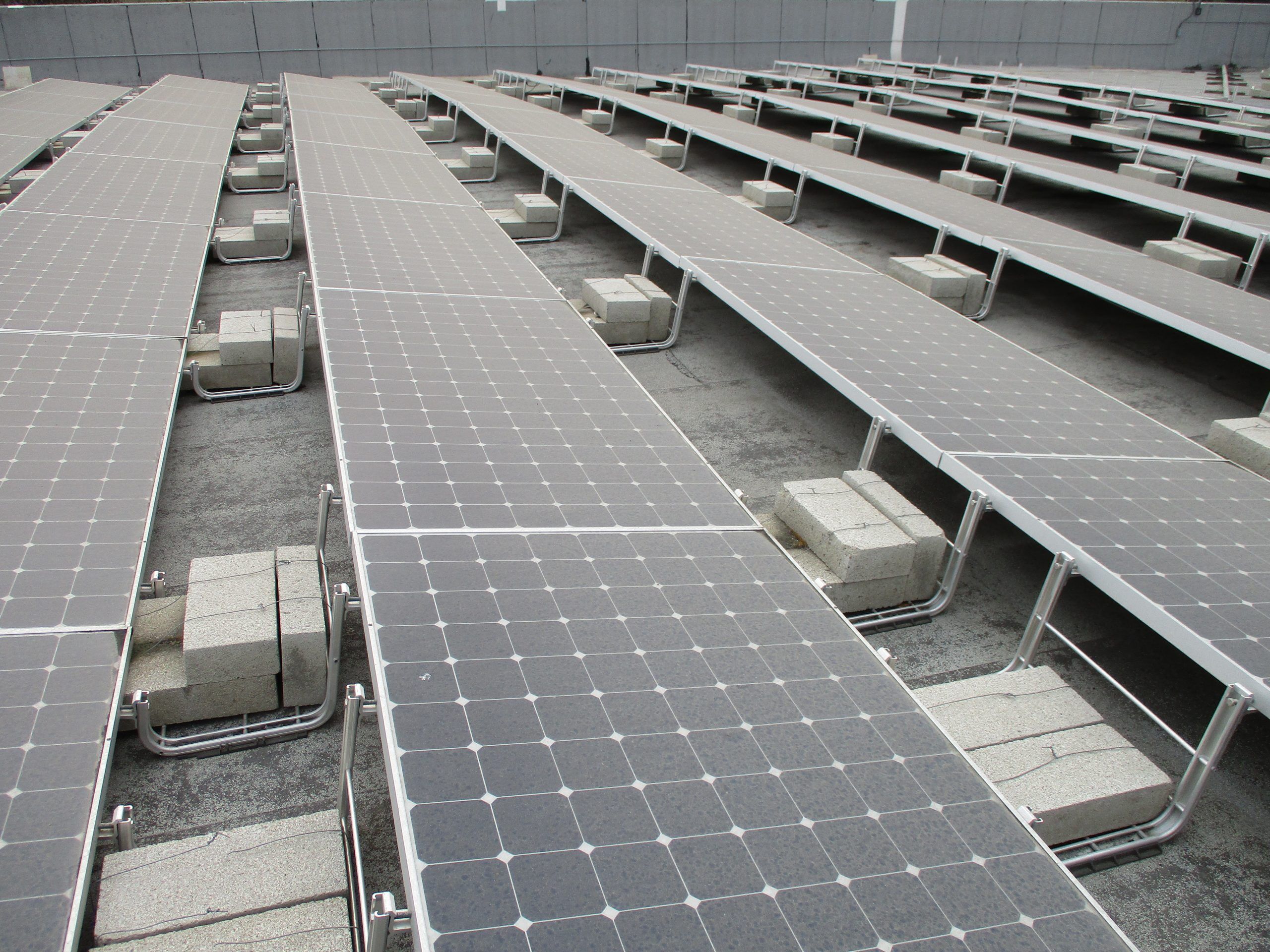
Surface Mounted Solar
If panels are supported by the substrate with individual frames and cinder blocks, they will need to be moved off the roof by a solar contractor before roofers can do their thing.
Typically, there isn’t room for both panel equipment and new roofing material on a roof. At least half the panels will need to be completely removed to facilitate initial loading of new materials.
In addition, roofing contractors perform considerable prep-work two to three weeks in advance of installing new material. The solar contractor will need to remove the remaining panels to allow for continued prep, loading and uninterrupted production of the waterproofing system during installation.
Structural Support
Generally, a single roof system can be resurfaced or overlaid with various types of material. The term ‘generally’ does not take into account the added weight of solar panels and mounting hardware. Accordingly building codes on roofing side with safety relative to structural design and supported weights.
Roofing professional always consider whether structures and substrates can support the weight of additional waterproofing systems and equipment. Reports from contractors that previously installed a solar system can offer insight on system weights, distribution and community approvals.
In the case of roof resurfacing and overlays this data is required to determine structural capacity for a second roof system alongside existing solar equipment. Weight shouldn’t be a concern when waterproofing is completely removed and replaced with a lighter material.
Conclusions
Spiraling cost of energy made the concept of solar benefits an intriguing opportunity for property owners. For some, the idea of third party ownership and management of solar energy on their property was difficult to ignore.
Surface mounted techniques provided a competitive edge for service providers eager to promote their solutions. This type of installation is convenient, non-intrusive and may cost less but overlooks the long term expense related to wear and encountered during scheduled upgrades.
Wear caused by equipment and support personnel can shorten the serviceable life of waterproofing. We’ve also seen shingles on sloped roofs age ten years in the time it took to install the solar. Rest assured, buyers looking for ways to reduce the purchase price will closely examine the timing and expense of upgrading the roof and cost of installing an elevated platform for an existing solar energy system.
An elevated support structure may cost more at the time of installation but significantly reduce the effects and cost of long term maintenance, repairs and replacement. At current inflation rates, the price to elevate solar in the future will be twice today’s cost and likely fall on new ownership.
Best Practice Notes:
- When third parties are involved in the ownership and installation of solar, make sure waterproofing remains accessible for inspection, system upgrades and repairs. Understand in advance if its required and who covers the expense of relocating panels during roof service events.
- Roof systems under NDL Warranty include performance requirements for both ownership and contractor compliance. Solar service providers should use the property owners preferred roofing contractor to waterproof penetrations and repairs.
- Logistically, the best time to install solar is when the waterproofing is being upgrade or replaced.
- Independent elevated support structures allow solar equipment and roofing to be installed and serviced independent of each other.
- Maintain all records, engineering reports and regulatory approvals on solar installations. This information will be required in ten or fifteen years when the waterproofing is upgraded or replaced.
- Diligently verify engineers and local building departments approve the additional weight of solar including proposed framing and distribution of cinder blocks used to stabilize surface mounted solar panels. Each of the blocks pictured above weigh 33 pounds or 99 – 132 lbs. per frame.
- During roof installation, avoid the temporary storage of panels in isolated areas of the roof. This creates islands of weight once evenly distributed across the substrate into much smaller centralized locations.
- Do not allow use of sand bags for platform stabilization.
- Elevated support structures assure accessibility while reducing wear on the waterproofing, service fees and disruptions during repairs and the inevitable roof system upgrade.
- Surface mounted solar panels may cost less but can restrict movement or flexibility of the roof system. Owners can expect increased maintenance and higher repair cost due to restricted access which may double the expense of a routine roof upgrade.
Waterproofing Expense Effects:
eScope Roofing Solutions
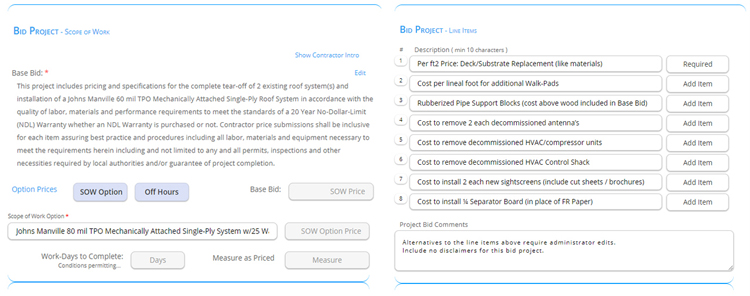
AI Generated Scope of Work for Commercial Roofing
Autonomous Scope of Work

eScope Commercial

Line Item Pricing

Autonomous Scope of Work & Line Items
eScope Commercial
eScope Commercial
Construction Project Supply Chain Infrastructure
CaPSCi Enabled!
