
Data Center Roof
Waterproofing
Operational oversight of data center property inevitably falls on management while investors, architects and general contractors hash out the particulars of cost and design. How AEC documents construction will determine if these facilities (housing the most advanced technologies) participate in the digital transformation in real estate.
High risk tenants house the latest electronics (BestBuy), apparels (Burlington) and servers (Digital Realty). Watertight roofing is essential to business continuity with data centers facing the greatest disruption and loss. Design of data centers, the roof substrate and waterproofing should prioritize how this use case interacts with routine requirements for maintenance and scheduled upgrades.
Performing Roof Upgrades
Installing a replacement roof is difficult at best and operationally disruptive to most data center tenants. Design considerations and planning can help new data centers work around these challenges in future upgrades.
It’s incredibly difficulty to shut down any portion of a data center facility to perform a roof upgrade. The risk of dust and debris below the substrate during roof improvements can restrict server operations. This usually requires tenants install drop protection above the computer equipment but that may not be possible.
Those most likely to encounter roofing events tend to be long term tenants. Inasmuch it’s advisable to install waterproofing that can endure multiple lease terms, minimize risks of moisture intrusion, effects of weather, deterioration and disruption to tenant operations.
Long term design objectives will help maximize ROI for tenants and owners. The standard for design and build of new data centers should emphasis sustainable waterproofing over price. Conversion of existing buildings may require agreement between stakeholders on waterproofing objectives, shared interest and common goals.
CRS Roof Consultants in Silicon Valley is familiar with the internal workings of data center operations. “Preventing a single outage justifies the expense of best practice roofing techniques but amortized through lease rates would be priced at pennies per square foot to recover costs in ten years, said Kevin Cardoza, a Technical consultant at CRS.
The impact of moisture intrusion on facilities that house computer servers has the highest risk of loss in the property industry. Roof leaks no longer affect just one user and computer in a ten by twelve foot cubical. Data centers can hold more than forty servers in a footprint just two feet wide by a depth of three feet.
Data & Equipment Value
The value of data a server contains could easily exceeding $1M per device. Depending on the number of processors, the cost of server equipment can be well over ten thousand dollars. And a standard server rack can hold 42 servers with equipment cost over $400,000 per rack.
A facility with dimensions of 100’ x 50’ can hold more than 80 server racks and up to 3,360 servers. The entry level price of $5,000 for a server would value the equipment at nearly $17M. Obviously, roof leaks present considerable risk so it’s important that roof designs, material and leases minimize exposure to property owners, management and tenants.
Data center operators are best advised to take ownership of rooftop waterproofing before building out the interior. Consider the impact of substrate design, wear and deterioration from weather, rooftop airflow or restrictions thereof and personnel servicing equipment.
It’s a similar situation for big box stores that maintain inventory on open showroom floors. The only difference is the type of inventory and potential for loss. The cost of roofing and impact of disruption linked to moisture intrusion is the same.
Delayed Roof Upgrades
However, the cost of roofing is not constant by any means. The ability to postpone a roof upgrade is perpetual and proportionate to a tolerance for repairs but how effective is this expense. Every year markets face inflation and regulatory influence on the price of roofing.
Size matters but the price to sustain watertight conditions of aged waterproofing over three years can be half the expense required to upgrade the roof to a twenty year serviceable life in year one. Four years later roofing expense can be 24% to 48% higher (at recent inflation rates) or $136K± on average for a roof system originally priced at $100K.
Best Practice
Experts at CRS in San Jose, CA advise moisture adverse tenants to proactively engage in the planning of rooftop waterproofing and working around scheduled improvements. The national average on roof replacement is about 83% or 17 years on a 20 year install. Long term tenants should plan appropriately and consider waterproofing with a 30 year serviceable life.
It is important that new build projects consider the requirements of future roof upgrades in current designs. Implementing flexibility that avoids disruption during maintenance, servicing and upgrades creates long term value. Raise platforms and pillow blocks go a long way towards preserving roof integrity and maintenance, facilitating upgrades and replacement. In contrast, high parapet walls around tight stuffed equipment wells create heat islands that deteriorate most roofing materials.
Material Options
Single-ply (SPY) offers the best overall waterproofing solution. Correctly welded seams create a solid bond that is consistent across the entire roof. The difference between 20, 25 and 30 year configurations is 20 mils or a 60 mil and 80 mil up to 120 mil systems. No additional equipment, material or manpower is required between these choices.
SPY sizes are also published as 115 & 135 mils for asphalt overlays and adhered installations. The additional 55 mils is a layer of fleeceback fabric attached to bottom of the SPY membrane.
SPY offers natural reflection of UV light where weather is dominated by low cloud coverage and little rain. Conversely, the sun reflection on SPY can accelerate deterioration of the membrane. Fortunately these membranes can be fully restored by ‘bonding a patch’ over affected areas.
Not all SPY membranes are created equal so the choice of manufacturer is critical to overall expense, maintenance and sustainability. In simple terms, the best choices in single ply manufacturers include Carlisle, Johns Manville and Sanafil.
Built-up roofing (BUR) both asphalt and SBS versions are great in high traffic areas or roofs with a lot of equipment and service personnel. However, they’re less practical in sunny regions, require five plies for 30 year warranties and can take much longer to install.
Fluid applied (coatings) performs well when retrofitting an existing built-up (cap-sheet) roof if we understand the difference between a simple coating and a polyester reinforced system. Notably, this solution offers two types of fluid – acrylic and silicon. Polyurethane sealants are best to use on concrete.
A coating provides a protective layer of reflectivity and will seal the cap-sheet but a twenty year material warranty does not constitute a watertight “roof system”.
If fluid applied is your choice look no further than acrylic and only acrylic without an emulsion underlayment. Its best to price two plies of polyester reinforcement set in nine gallons of acrylic (per ft2) for a twenty year system warranty. Manufacturer choices may depend on location of the property.
Service Providers (Roofing Contractors)
We look beyond the roofing company itself and focus on current personnel, said Cardoza at CRS Roof Consultants. Field supervisors with a proven history of quality control can be more valuable than a practiced contractor.
Installation of roof waterproofing is essentially produced (manufactured) onsite in an uncontrolled. The cost to roof a 100,000 square foot facility can easily exceed a million dollars. Configuration tweaks allow others to price it much lower but at a cost. The trade-offs include the quality of material, personnel and attention to detail. Diminished performance requirements typically affect the quality of contractor deliverables.
Long term utility, untimely disruptions and the sensitive nature of server operation are all variables best taken under advisement at the point of build and improvements. Waterproofing of high risk facilities should preemptively focus on minimizing disruptions, deterioration and upgrades every fifteen to twenty years.
Industry standards suggest twenty five years is a reasonable expectation on a thirty year waterproofing system. A good material and contractor with skilled personnel will be instrumental to achieving a thirty year performance.
Upgrades & Future Technology
Anticipate traditional scenarios in the perspectives of real estate’s digital transformation. Property often faces new ownership, changes in management and a generation of roofing contractors are set to retire. The waterproofing, its installation and maintenance history should be well documented.
Reliable and accessible data enables analysis by AI who will be advising future property owners and service provider ecosystems long before new build and improvements require a replacement roof. Digitally compiled technical data on systems and equipment create value today for tomorrow markets.
Until then, proactive annual inspections combined with preventative maintenance reduce the risk of roof leaks, damage to server equipment and more often exceeds the expected serviceable life of roofing.
eScope Roofing Solutions
AI Generated Scope of Work for Commercial Roofing
Autonomous Scope of Work

eScope Commercial

Line Item Pricing

Autonomous Scope of Work & Line Items
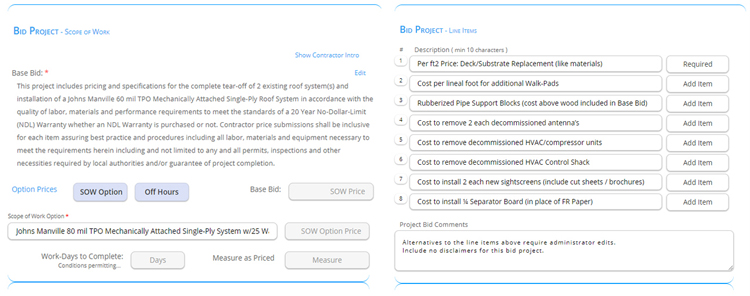
eScope Commercial
eScope Commercial
Digital Construction Bid Submission
CaPSCi Enabled!
